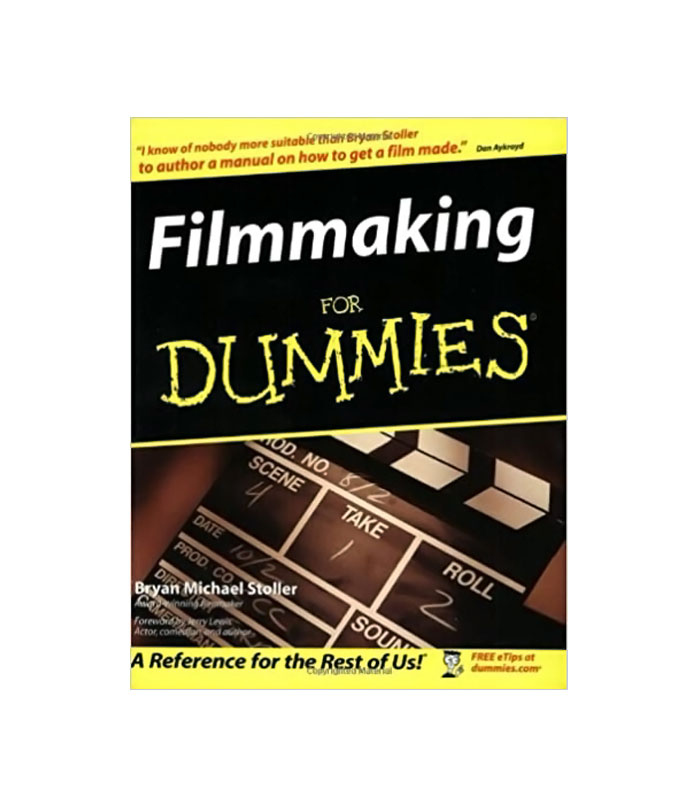

Filmmaking for Dummies by Bryan Michael Stoller
Film is a powerful medium. Successful filmmakers possess the passion to visually tell a story that will affect people’s emotions, make them see things differently, help them discover new ideas, or just create an escape for them.
Whether you love the experience of being enthralled by movies or the excitement, challenge, and magic of making the movie yourself, Filmmaking For Dummies is your primer to creating a respectable product. For the seasoned professional, this friendly reference can inspire you with fresh ideas – before you embark on your next big flick. Get ready to roll with expert information on
- Defining the difference between independent and studio films
- Knowing what genre fits your fancy
- Finding perfect locations
- Storyboarding your film
- Directing the action
- Giving credit and titles
Written from the author’s 30 years of hands-on work as a writer, producer, and film director, Filmmaking For Dummies carries you through from screenplay to distribution, with lots of experience-packed insight into
- Writing or finding a screenplay
- Raising financing for your film
- Budgeting and scheduling your film
- Hiring the right actors and crew
- Planning, shooting, and directing your film
- Putting your film together in the editing room
- Finding a distributor to get your film in from of an audience
- Entering (and maybe even winning) film festivals
Taking into account the advent of digital technology, author Bryan Michael Stoller focuses on creative elements that apply to both film and video production. He also points our technical differences and notes the many similarities between traditional and newer age making of motion pictures – all in a fun and engaging way that’ll have you shooting for the stars!
Successful filmmakers possess the passion to visually tell a story that will affect people’s emotions, make them see things differently, help them discover new ideas, or just create an escape for them. Whether you love the experience of being enthralled by movies or the excitement, challenge, and magic of making the movie yourself, Filmmaking For Dummies is your primer to creating a respectable product.
MediaVision issues this from the Mauritius warehouse for Indian Ocean shoots.
Key capabilities
- Filmmaking book as listed: Filmmaking for Dummies by Bryan Michael Stoller
- For the seasoned professional, this friendly reference can inspire you with fresh ideas – before you embark on your next big flick
- Get ready to roll with expert information on
- Defining the difference between independent and studio films
- Raising financing for your film
- Reference copy for directors, camera, lighting or grip departments on set and in prep
- Sold or issued as the listed expendable; quantity on quote
Technical specifications
| Category | Consumables > Books |
|---|
Rental
The listed book, as stocked by MediaVision. Edition and condition are confirmed on the quote; no extra titles or materials are assumed.
Rental & crew
Stocked by MediaVision in Mauritius and available for productions across the Indian Ocean. Crew can be arranged on request. Share your dates and quantities and we will return availability and a quote.
Related products



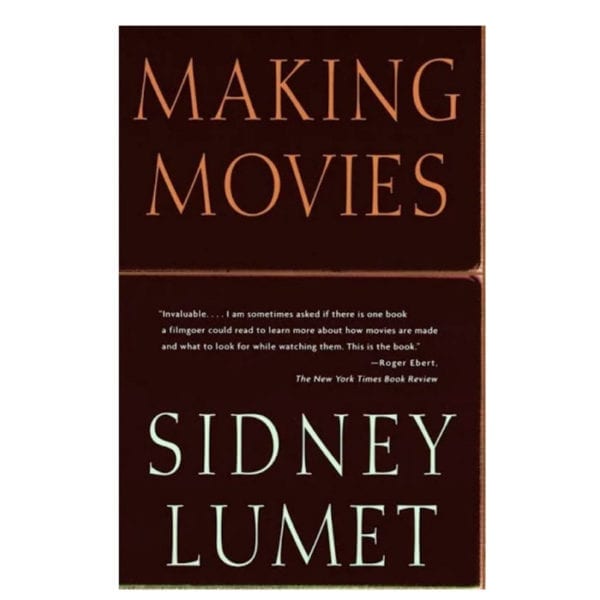
Making Movies by Sidney Lumet
From one of America's most acclaimed directors comes a book that is both a professional memoir and a definitive guide to the art, craft, and business of the motion picture. Drawing on 40 years of experience on movies ranging from Long Day's Journey Into Night to The Verdict, Lumet explains the painstaking labor that results in two hours of screen magic.
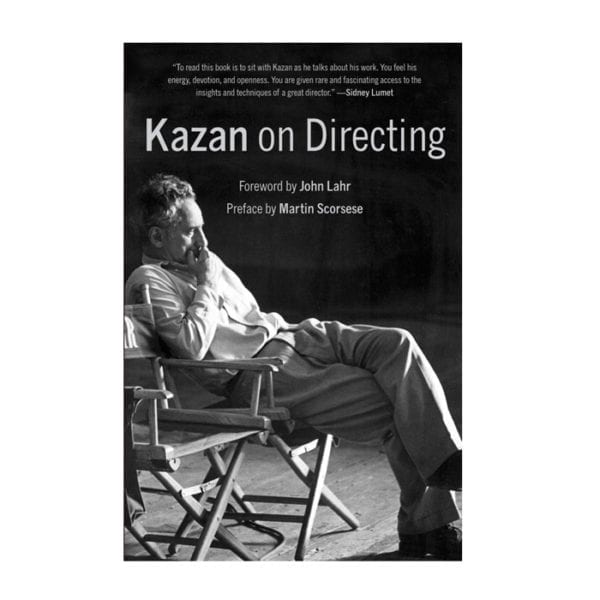
Kazan on Directing by Elia Kazan
Elia Kazan was the mid-twentieth century’s most celebrated director of both stage and screen, and this book shows us the master at work.
Kazan directed virtually back to back the greatest American dramas of the era—by Arthur Miller and Tennessee Williams—and revolutionized theatre and film with dynamic action, poetic staging, and rigorous naturalism. His list of Broadway and Hollywood successes—A Streetcar Named Desire (stage and screen), All My Sons, Death of a Salesman, Cat on a Hot Tin Roof, On the Waterfront, East of Eden, Baby Doll, America America, to name only a few—is a testament to his profound impact on the art of directing. Kazan’s insights into these and other classic stage works shaped their subsequent productions—and continue to do so. There is no directorial achievement in America equal to his.
This remarkable book, drawn from his notebooks, letters, interviews, and autobiography, reveals Kazan’s method: how he uncovered for himself the “spine” or core of each script and each character; how he analyzed each piece in terms of his own experience; how he determined the specifics of his production, from casting and costuming to set design and cinematography. And we see how he worked with writers on scripts and with actors on interpretation.
The final section, “The Pleasures of Directing”—essays Kazan was writing in his last decade—is informal, provocative, candid, and passionate; a wise old pro sharing the secrets of his craft, advising us how to search for ourselves in each project, how to fight the system, and how to have fun doing it.
Published in Kazan’s centenary year, this monumental, revelatory book, edited by Robert Cornfield, is essential reading for everyone interested in American movies and theatre.
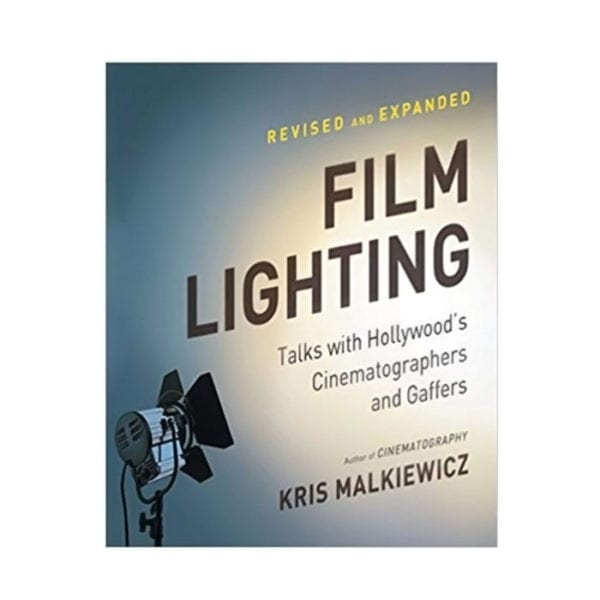
Film Lighting Talks with Hollywood’s Cinematographers and Gaffers by Kris Malkiewicz
Film Lighting is an indispensable sourcebook for the aspiring and practicing cinematographer, based on extensive interviews with leading cinematographers and gaffers in the film industry Film lighting is a living, dynamic art influenced by new technologies and the individual styles of leading cinematographers. Reporting on the latest innovations and showcasing in-depth interviews with industry experts, Film Lighting provides an inside look at how cinematographers and film directors establish the visual concept of the film and use the lighting to help tell the story. This edition provides an invaluable opportunity to learn from the industry’s leaders.